
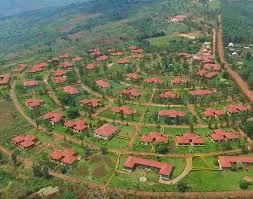
1 million children were left orphaned and displaced in the wake of the 1994 Rwandan genocide, which posed one of, if not the most, critical problem facing the rebuilding nation. Many children to this day remain orphaned, and are far less likely to graduate high school and far more likely to be pre-disposed to crime. In 2005, Anne Heyman learned of this crisis and decided to build the Agahozo-Shalom Youth Village (ASYV), a residential community for Rwandan orphans, and would model it after the communities the Israelis created for orphans of the holocaust.
ASYV is located about an hour and a half east of Kigali. It opened in 2008 and provides housing and education, as well as a plethora of social, athletic, and community programs for the most vulnerable Rwandan high schoolers across the country. The recruiting process takes six months and ASYV recruiters interview 9th graders who the nation identifies as the most vulnerable (many of victims of malnourishment, sexual and physical abuse, and homelessness). Nevertheless, ASYV attracts prospective students who exude a “spark of resilience”, which is an incredible attribute for young adults who have gone through hell.
Each class at ASYV has 128 students. and the 100 person faculty of teachers, chefs, coaches, IT professionals, and volunteers is committed to providing an immersive program that provides hope, opportunity, and healing for young people who previously had none of that. Over 60% of the students come from the lowest level of poverty in the country.
The campus is extraordinary, encompassing 144 acres, and includes a farm with chickens, cows, goats, and rabbits, a solar power field that powers an incredible 5-8% of the energy in the ENTIRE NATION, basketball courts, a soccer field, recording studios, multiple libraries, a media center to learn AV, and any instrument an aspiring musician would like to play.
An important distinction to note about the ASYV is that it is a “village”, not a boarding school or an orphanage. Each house of ~20 students has a host mom, and functions as a family. The students spend the duration of their four years in the same house, and each house is named after an inspirational historical figure (e.g., Helen Keller, Louie Armstrong). Older students function as mentors for the younger students, which is especially important for the younger students, who are at a precarious stage that is scary enough for teenagers who grow up in functional households, much less students who have to relocate across a country to a new home with new expectations.
To encourage assimilation, the first year of the program is an “Enrichment Year” in which the students learn about the school’s core values, vision, and take up to 1,000 hours in English language courses. The school is extremely litigious in its gathering data points from current students as well as alumni and one of the strongest predictors of a student’s likelihood for success (gainful employment, post-secondary education) is their aptitude in English, particularly those who are interested in pursuing hospitality. Nevertheless, 75+% of students are gainfully employed or attending college after their time at ASYV, which is amazing considering the circumstances that drive them to the village in the first place. It was extremely interesting talking with the staff who is involved with analyzing the data that helps explain the root causes of success and failure for students, and how they use that valuable information to shape their curriculum, pedagogy, and focus points.
The visit was a phenomenal experience and the amount of smiles, pride, and dignity that I saw across the campus was extremely encouraging. I saw future leaders, passion in sports, art, and media, and camaraderie among the entire student body. It was an incredible visit and I was truly inspired by everyone who was generous enough to spend their time teaching me about all the village has to offer.